Artículo de revisión
Vol. 51 | Núm. 1 (Febrero 2024)
15 min
Dietas a base de plantas y sus efectos sobre el metabolismo y la supervivencia de pacientes con enfermedad renal crónica en tratamiento conservador
Plant-based diets and their effects on the metabolism and survival of chronic renal patients undergoing conservative treatment
Ingrid França, Paula Chiarello
University of São Paulo, Ribeirão Preto Medical School, Department of Nutrition and Metabolism, Postgraduate Program, Ribeirão Preto, São Paulo, Brazil.
https://doi.org/10.4067/s0717-75182024000100094
Recepción:
29/08/2023
Aceptación:
11/12/2023
Publicación:
28/02/2024
Métricas
56
Visualizaciones
23
Descargas
Compartir
Compartir
Resumen (ES)
La dietoterapia en el tratamiento conservador de la enfermedad renal crónica implica la restricción de proteínas, pero aún no hay pruebas suficientes para recomendar un tipo concreto de proteínas, ya sean animales o vegetales. Sin embargo, los estudios sugieren que las dietas basadas en plantas ayudan a reducir la ingesta de proteínas totales y animales, disminuyen la necesidad de fármacos nefroprotectores, mejoran las complicaciones y presentan ventajas con respecto a la progresión de la enfermedad y la supervivencia de los pacientes. En este artículo se consideran datos actualizados sobre los efectos de esta dieta y se observa que, cuando es hipoproteica, principalmente vegetal y en algunos casos se complementa con cetoanálogos, puede dar lugar a resultados clínicos positivos, como una disminución retardada de la tasa de filtración glomerular, concentraciones más bajas de urea, concentraciones reducidas de creatinina y fósforo séricos, menor acidosis metabólica, mayor sensibilidad a la insulina y menor inflamación sistémica. En conjunto, este patrón dietético tiene el potencial de retrasar el inicio de la diálisis con una menor progresión de la insuficiencia renal. Es necesario seguir investigando para caracterizar mejor este patrón dietético.
Palabras clave (ES):
Proteína vegetal
Insuficiencia renal crónica
Metabolismo
Tratamiento Conservador
Dieta vegetariana
Resumen (EN)
Diet therapy in conservative treatment of chronic kidney disease involves protein restriction, but there is not enough evidence to recommend a particular type of protein, whether animal or plant based. However, studies suggest that plant-based diets help reduce the consumption of total and animal protein, reduce the need for nephroprotective drugs, improve complications and bring advantages in terms of disease progression and patient survival. The article considers up-to-date data on the effects of this diet and observed that when low in protein, primarily vegetable and in some cases supplemented with ketoanalogues, it can result in positive clinical outcomes, such as: delay in the decrease in the glomerular filtration rate, lower concentrations of urea, reduction of serum creatinine and phosphorus concentrations, lower metabolic acidosis, higher insulin sensitivity and lower systemic inflammation. As a whole, this dietary pattern may be able to postpone the start of dialysis with less progression of renal insufficiency. Additional research is needed to better characterize this dietary pattern.
Palabras clave (EN):
Plant Proteins
Vegetarian Diet
Conservative Treatment
Metabolism
Chronic Kidney Failure
Introduction
Diet therapy in the conservative care of chronic kidney disease (CKD) involves protein restriction, which results in lower production of uremic toxins and better control of uremic syndrome symptoms. The recommendations by the Kidney Disease Outcomes Quality Initiative (KDIGO 2023) are 0,8 g of protein per kg of body weight per day for adults with CKD stage 3 to 5, unless there are contraindicating conditions, such as malnutrition, cachexia or sarcopenia1.
There is still not enough evidence to recommend a specific type of dietary protein, be it animal or vegetable, however the recommended dietary pattern is low in ultra-processed foods, or even the Mediterranean diet, which contributes to reducing cardiovascular risk1.
The National Kidney Foundation considers vegetarianism to be beneficial for patients with CKD, as studies show that a plant-based diet can hinder the onset or progression of complications in the course of the disease, such as heart disease and proteinuria2. Specifically in conservative treatment, such diets help to reduce the consumption of total and animal protein, reduce the need for nephroprotective drugs, improve complications and bring advantages regarding the progression of the disease and the survival of this patient3,4.
For years, vegetarianism and kidney disease were considered unfeasible to associate because plant-based diets, despite containing low amounts of protein, are rich in potassium and phosphorus, which would be inappropriate for patients with CKD due to the greater difficulty in controlling mineral metabolism disorders2. However, evidence from clinical studies shows that this diet can be beneficial if well targeted [2], resulting in improved glomerular filtration rates (GFR) compared to a diet based on animal foods5.
In view of the above, the aim of this review is to analyze the effects of a plant-based diet on the metabolism and survival of patients with chronic kidney disease during conservative treatment.
Methodology
This was an explanatory, bibliographical and qualitative study. The studies considered for this review focused on adults and elderly people with chronic kidney disease in the non-dialysis phase. The guiding question for this study (“Do plant-based diets have an effect on metabolic control and survival in non-dialysis chronic kidney patients?”) was developed using the PICO strategy, an acronym for P: population/patients (kidney patients undergoing conservative treatment); I: intervention (plant-based diet); C: comparison/control (conventional diet); O: outcome/outcome (advantages in metabolism and survival).
This is an integrative literature review conducted through a search on MEDLINE/PUBMED, Scientific Electronic Library Online (SCIELO), and Virtual Health Library (VHL) databases in the area of Latin American and Caribbean Health Sciences Literature (LILACS). By consulting the Health Sciences Descriptors (DeCS) and Medical Subject Headings (MeSH), the following descriptors were selected and used: vegetable protein, dietary vegetable protein, vegetarian diet and chronic renal failure.
The inclusion criteria were articles published between 2012 and 2022, whose sample included patients with non-dialysis chronic kidney disease and whose objective involved evaluating a primarily plant-based dietary pattern. Those that did not include such a diet, case reports, bibliographic reviews, editorials, informative texts, studies focused on nutritional composition, professional perspectives, culinary processing, metabolomics, animals, children, pregnant women and patients undergoing renal replacement therapy were excluded.
An analytical reading of the eight articles selected was carried out and their main data was organized in a table so that they could later be interpreted, and discussed.
Results
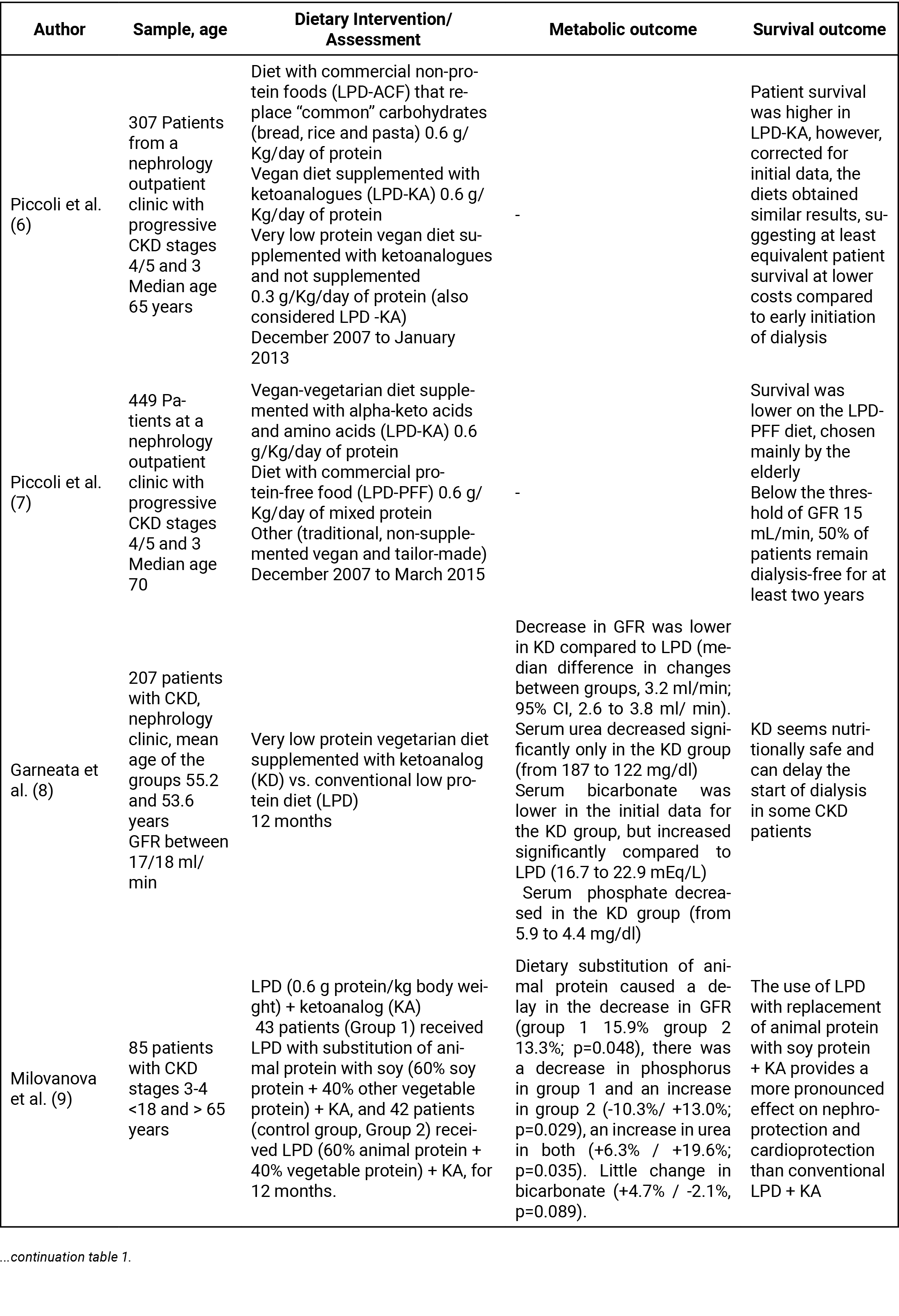
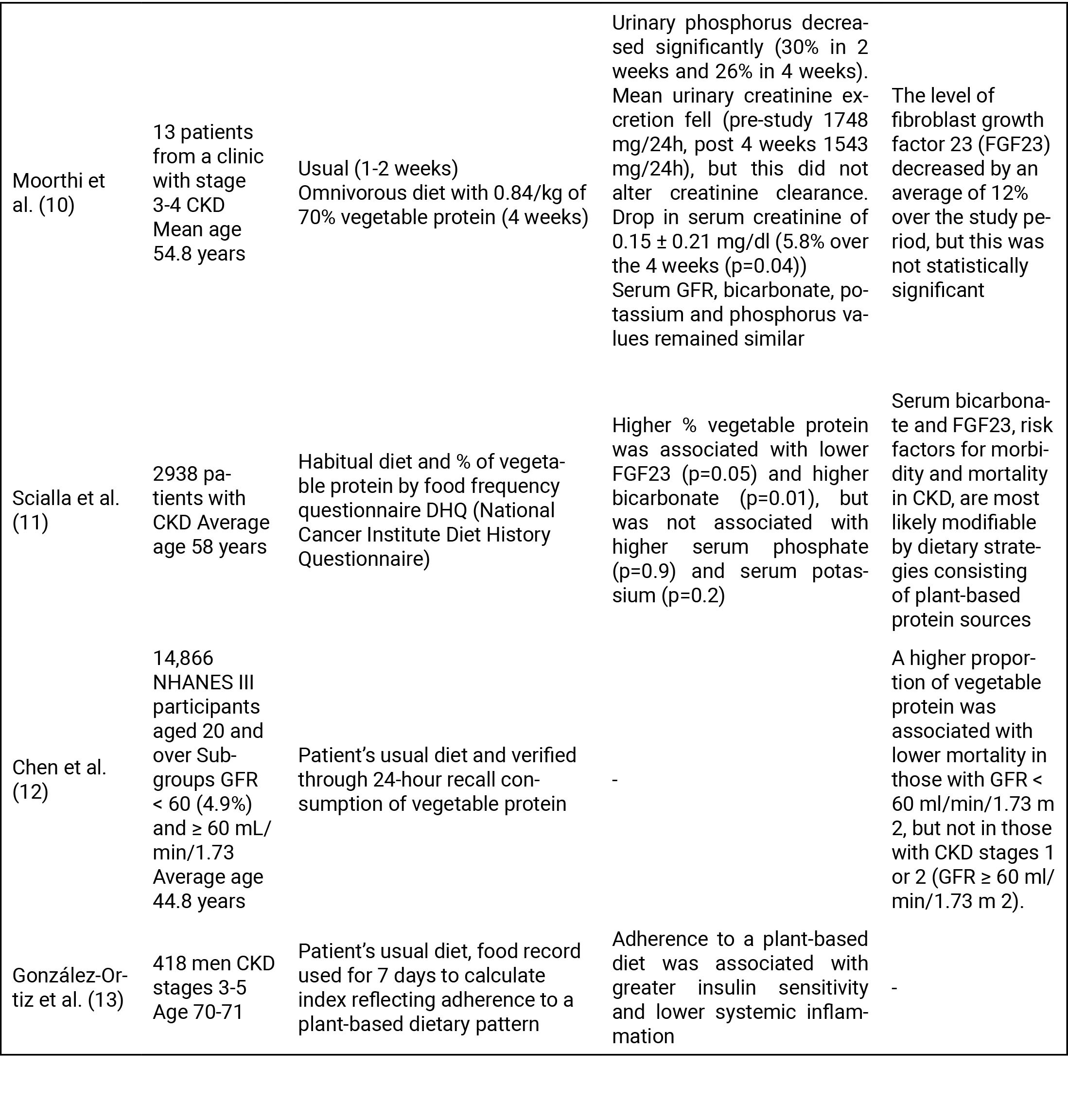
Table 1 shows the eight studies evaluated (author, year, country, sample, age, intervention/evaluation) and the main results in terms of metabolic and survival outcomes, where applicable.
Of the studies selected, only Chen et al.12 had a generalized sample, 4.9% of which had a GFR below 60 mL/min/1.73m2. All the others included only patients with kidney disease.
Only González-Ortiz et al.13 assessed the association between adherence to plant-based dietary patterns in people with CKD stages 3-5 and measures of insulin sensitivity and inflammation, but no aspects of survival/mortality were studied. While Piccoli et al.6 and7 had precisely this focus through observational studies, evaluating fewer aspects of metabolic control, more focused on the context of death and dialysis in 2014. The 2016 study showed that there was good biochemical control during the diet, adherence (0.6 g/Kg/day) assessed in 24-hour urine collections was very good (median 0.47 g/Kg/day) and more than half of the patients were slightly below the prescribed intake. Parathormone and bicarbonate levels were within expectations.
Not all the studies directly analyzed aspects of survival, however, some provided data that were considered in this context, namely the level of fibroblast growth factor 23 (FGF23) (a risk factor for morbidity and mortality in CKD), postponement of renal replacement therapy, cardio and nephroprotection.
Table 1. Characterization and main results of the selected studies.
Discussion
Milovanova et al.9 showed that a diet composed entirely of vegetable protein resulted in a delayed reduction in GFR. Garneata et al.8 also observed a smaller decrease in GFR, as well as a decrease in urea, with a very low-protein vegetarian diet supplemented with ketoanalogues.
Plant proteins are richer in phosphorus compared to animal proteins, however the phosphate present in plant proteins is only 30% to 50% bioavailable, whereas in animal proteins, for example in dairy products, the estimated bioavailability is between 70% and 80%. This is associated with the high content of phytates in plant proteins, which bind to phosphorus and hinder its absorption. Therefore, the consumption of plant foods, especially grains, may be associated with decreased phosphorus absorption compared to meat or casein-based diets14.
The reduction in phosphorus was evidenced in the study by Milovanova et al.9, Garneata et al.8, as well as Moorthi et al.10. Similar findings were found by Moe et al.14, in which patients on a vegetarian diet had lower serum phosphorus concentrations and a tendency towards reduced urinary phosphorus excretion over 24 hours, when compared to patients on a meat-based diet.
In the study by Scialla et al.11, a higher percentage of vegetable protein (>44%) in the diet was not associated with higher serum potassium and phosphorus. With regard to potassium, the restriction of plant foods as a general strategy to prevent hyperkalemia is not advised, as it deprives CKD patients of the potential benefits of these foods. Depending on the clinical condition, patients can moderately consume options with lower potassium content15, a goal often adopted in nutritional monitoring for these patients.
The scientific evidence supporting dietary potassium restriction is weak. Estimations of dietary potassium correlate poorly with circulating potassium. This restriction has the disadvantages of the need for lifestyle changes, uncertainty regarding the degree and reliability of the response to the restriction, financial cost, implementation difficulties, risk of nutritional deficiencies, loss of pleasure in eating and impact on social activities16.
A plant-based diet also provides fiber that contributes to increased stool viscosity and motility, as well as slowing the absorption of potassium, glucose and free fatty acids, generating lower insulin release and greater fat oxidation 17, additional benefits in the management of kidney disease and associated comorbidities.
According to Martínez-Pineda et al.18 constipation due to uremia is a common symptom for patients with CKD and the consumption of fiber contained in whole foods and legumes can help reduce this symptom, however, because they have higher phosphorus and/or potassium, they are traditionally avoided to reduce complications such as hyperkalemia and hyperphosphatemia, generating a worsening of the constipation picture. The authors evaluated the effects of different cooking methods without water exchange (immersion vs. pressure cooking) on the reduction of the final mineral content in legumes, and showed reductions of up to 80% in potassium content after maceration and cooking, with final values below 120 mg/100 g of edible portion, validating cooking techniques that can be oriented to patients, enabling the consumption of these foods even for those with greater restrictions.
Plants, dietary sources of fiber, in addition to helping intestinal function, modify the profile of its microbiota, enabling increased production of anti-inflammatory compounds and reduced production of uremic toxins15.
As evidenced in the study by González-Ortiz et al.13, a dietary pattern based on vegetables, that is, rich in fiber, helps to improve inflammation. There is evidence to support these data. Observational studies in CKD patients highlighted that higher fiber intake was associated with lower levels of C-reactive protein and interleukin 6. Symbiotic bacteria ferment dietary fiber, releasing short-chain fatty acids that increase the integrity of the intestinal barrier, favoring anti-inflammatory and immunomodulatory effects19,20.
Studies have shown associations between the intake of antioxidants and lower formation of free radicals, showing that they effectively suppress the release of inflammatory cytokines, reducing reactive oxygen species and consequently presenting a protective effect on the development of inflammatory diseases21.
For glycemic control in diabetes the associations are also clear. A large population-based cohort showed that a more plant-based diet may decrease the risk of insulin resistance as well as prediabetes and type 2 diabetes12. Adherence to a plant-based diet was associated with greater insulin sensitivity13.
As renal function deteriorates, there is decreased renal excretion of non-volatile acids produced by metabolism of protein-rich diets with increased bioavailability. This acidosis may also be aggravated by low production of short-chain fatty acids, a situation that can be alleviated by a plant-based diet15.
An essentially vegetable diet can have a positive clinical impact on the control of metabolic acidosis, as observed by Scialla et al.11, where there was an improvement in this acidosis through a diet with a higher proportion of vegetable proteins and also by Garneata et al.8, who showed an increase in serum bicarbonate when adopting a vegetarian diet with very low protein content, supplemented with ketoanalogues. The effect of increased fruit and vegetable consumption over one year was comparable to the use of sodium bicarbonate on the control of metabolic acidosis and the reduction of renal damage in patients with stage 4 CKD22.
The dietary pattern, considering various aspects of eating habits, shows direct associations with clinical outcomes. Dietary habits of 1110 Swedish men, 506 with CKD, showed that approaching a Mediterranean diet score independently predicted survival in CKD patients23. It is known that a Mediterranean dietary pattern is not vegetarian, but is characterized by a high intake of vegetables, legumes, fruits and cereals, corroborating the findings of the De Chen, et al.24 study where a higher proportional intake of vegetable proteins was associated with lower mortality in individuals with GFR < 60 ml/min/1.73 m².
A 2018 meta-analysis evaluating 17 studies, four of them multicenter, sought to determine the efficacy of low-protein diets in preventing progression of CKD to end-stage and delaying the need to initiate dialysis in non-diabetic adults and concluded that very low-protein diets reduce the number of people with stage 4 or 5 CKD who progress to end-stage (10 studies, 1010 participants. Hazard ratio 0.65, 95% confidence interval 0.49 to 0.85; 165 per 1,000 fewer reached it25.
Evidence suggests that a hypoprotein diet of 0.6-0.8 g/kg/day, composed of more than 50% plant sources, guided by specialized nutritionists, is promising. This is because diets rich in protein, especially meat, lead to greater cardiovascular risk, a higher incidence and faster progression of CKD, due to increased glomerular hyperfiltration and intraglomerular pressure. Meat intake aggravates uremia, which can increase the risk of constipation with consequent hyperkalemia resulting from low fiber intake26.
Conclusion
A low-protein vegetarian diet, with protein sources mainly of plant origin, could be a heart-healthy, safe, viable and versatile dietary pattern for this patient in conservative care 25. Vegetable proteins could meet the recommendations of up to 0.8 g/kg of weight/day, with more than 50% of proteins of plant origin, associated or not with ketoanalogues, depending on the clinical and nutritional condition, as well as individual preferences.
Based on the data presented, it was observed that a dietary pattern based on plants and reduced in proteins, being them in greater proportion of plant origin, when well oriented and accompanied, can result in positive clinical outcomes, such as the delay in the decrease of GFR, lower urea concentrations when associated with ketoanalogues, reduction of serum concentrations of creatinine and phosphorus, lower metabolic acidosis, greater sensitivity to insulin and lower systemic inflammation. Taken together, this dietary pattern may be able to delay the initiation of dialysis with less disease progression, favoring patient survival and leading to a lower burden on the healthcare system.
Further research is needed to strengthen the evidence cited, especially in experimental studies of longer duration, in randomized controlled trials and of reasonable sample size.
Conflicts of Interest
The authors declare no conflict of interest.
Funding
The present article has not received any specific grant from agencies in the public, commercial or for-profit sectors.
References
- KDIGO. Official Journal Of the international Society Of nephrology KDIGO 2023 Clinical Practice Guideline for the Evaluation and Management of Chronic Kidney Disease. PUBLIC REVIEW DRAFT. [Internet]. 2023. Available from: https://kdigo.org/wp-content/uploads/2017/02/KDIGO-2023-CKD-Guideline-Public-Review-Draft_5-July-2023.pdf
- Gluba-Brzózka A, Franczyk B, Rysz J. Vegetarian Diet in Chronic Kidney Disease—A Friend or Foe. Nutrients. 2017 Apr 10;9(4):374.
- Joshi S, Hashmi S, Shah S, Kalantar-Zadeh K. Plant-based diets for prevention and management of chronic kidney disease. Current Opinion in Nephrology and Hypertension. 2020 Jan;29(1):16–21.
- Joshi S, McMacken M, Kalantar-Zadeh K. Plant-Based Diets for Kidney Disease: A Guide for Clinicians. American Journal of Kidney Diseases. 2020 Oct;
- Lohsiriwat S. Protein Diet and Estimated Glomerular Filtration Rate. Open Journal of Nephrology. 2013;03(02):97–100.
- Piccoli GB, Deagostini MC, Vigotti FN, Ferraresi M, Moro I, Consiglio V, et al. Which low-protein diet for which CKD patient? An observational, personalized approach. Nutrition. 2014 Sep;30(9):992–9
- Piccoli GB, Nazha M, Capizzi I, Vigotti FN, Scognamiglio S, Consiglio V, et al. Diet as a system: an observational study investigating a multi-choice system of moderately restricted low-protein diets. BMC Nephrology. 2016 Dec;17(1).
- Garneata L, Stancu A, Dragomir D, Stefan G, Mircescu G. Ketoanalogue-Supplemented Vegetarian Very Low–Protein Diet and CKD Progression. Journal of the American Society of Nephrology. 2016 Jan 28;27(7):2164–76.
- Milovanova LYu, Taranova MV, Volkov AV, Milovanova SYu, Beketov VD. Soy protein as part of a low-protein diet is a new direction in cardio- and nephroprotection in patients with 3B–4 stages of chronic kidney disease: prospective, randomized, controlled clinical study. Terapevticheskii arkhiv. 2022 Aug 4;94(6):756–62.
- Moorthi RN, Armstrong CLH, Janda K, Ponsler-Sipes K, Asplin JR, Moe SM. The Effect of a Diet Containing 70% Protein from Plants on Mineral Metabolism and Musculoskeletal Health in Chronic Kidney Disease. American Journal of Nephrology. 2014;40(6):582–91.
- Scialla JJ, Appel LJ, Wolf M, Yang W, Zhang X, Sozio SM, et al. Plant Protein Intake is Associated With Fibroblast Growth Factor 23 and Serum Bicarbonate Levels in Patients With Chronic Kidney Disease: The Chronic Renal Insufficiency Cohort Study. Journal of Renal Nutrition. 2012 Jul;22(4):379-388.e1.
- Chen Z, Zuurmond MG, van der Schaft N, Nano J, Wijnhoven HAH, Ikram MA, et al. Plant versus animal based diets and insulin resistance, prediabetes and type 2 diabetes: the Rotterdam Study. European Journal of Epidemiology. 2018 Jun 8;33(9):883–93.
- González-Ortiz A, Xu H, Avesani CM, Lindholm B, Cederholm T, Risérus U, et al. Plant-based diets, insulin sensitivity and inflammation in elderly men with chronic kidney disease. Journal of Nephrology [Internet]. 2020 Oct 1 [cited 2021 Mar 18];33(5):1091–101.
- Moe SM, Zidehsarai MP, Chambers MA, Jackman LA, Radcliffe JS, Trevino LL, et al. Vegetarian Compared with Meat Dietary Protein Source and Phosphorus Homeostasis in Chronic Kidney Disease. Clinical Journal of the American Society of Nephrology [Internet]. 2010 Dec 23;6(2):257–64.
- Carrero JJ, González-Ortiz A, Avesani CM, Bakker SJL, Bellizzi V, Chauveau P, et al. Plant-based diets to manage the risks and complications of chronic kidney disease. Nature Reviews Nephrology. 2020 Jun 11;16(9):525–42.
- Clase CM, Carrero JJ, Ellison DH, Grams ME, Hemmelgarn BR, Jardine MJ, et al. Potassium homeostasis and management of dyskalemia in kidney diseases: conclusions from a Kidney Disease: Improving Global Outcomes (KDIGO) Controversies Conference. Kidney International. 2020 Jan;97(1):42–61.
- Bozzetto L, Costabile G, Della Pepa G, Ciciola P, Vetrani C, Vitale M, et al. Dietary Fibre as a Unifying Remedy for the Whole Spectrum of Obesity-Associated Cardiovascular Risk. Nutrients. 2018 Jul 21;10(7).
- Martínez-Pineda M, Yagüe-Ruiz C, Caverni-Muñoz A, Vercet-Tormo A. Cooking Legumes: A Way for Their Inclusion in the Renal Patient Diet. Journal of Renal Nutrition: The Official Journal of the Council on Renal Nutrition of the National Kidney Foundation. 2019 Mar 1;29(2):118–25.
- Xu H, Huang X, Risérus U, Krishnamurthy VM, Cederholm T, Ärnlöv J, et al. Dietary Fiber, Kidney Function, Inflammation, and Mortality Risk. Clinical Journal of the American Society of Nephrology : CJASN. 2014 Dec 5;9(12):2104–10.
- Raj Krishnamurthy VM, Wei G, Baird BC, Murtaugh M, Chonchol MB, Raphael KL, et al. High dietary fiber intake is associated with decreased inflammation and all-cause mortality in patients with chronic kidney disease. Kidney International. 2012 Feb;81(3):300–6.
- Sanches-Silva A, Costa D, Albuquerque TG, Buonocore GG, Ramos F, Castilho MC, et al. Trends in the use of natural antioxidants in active food packaging: a review. Food Additives & Contaminants: Part A. 2014 Mar 4;31(3):374–95.
- Goraya N, Simoni J, Jo CH, Wesson DE. A Comparison of Treating Metabolic Acidosis in CKD Stage 4 Hypertensive Kidney Disease with Fruits and Vegetables or Sodium Bicarbonate. Clinical Journal of the American Society of Nephrology. 2013 Feb 7;8(3):371–81.
- Huang X, Jiménez-Moleón JJ, Lindholm B, Cederholm T, Ärnlöv J, Risérus U, et al. Mediterranean Diet, Kidney Function, and Mortality in Men with CKD. Clinical Journal of the American Society of Nephrology. 2013 Jun 6;8(9):1548–55.
- Chen X, Wei G, Jalili T, Metos J, Giri A, Cho ME, et al. The Associations of Plant Protein Intake With All-Cause Mortality in CKD. American Journal of Kidney Diseases. 2016 Mar;67(3):423–30.
- Hahn D, Hodson EM, Fouque D. Low protein diets for non-diabetic adults with chronic kidney disease. Cochrane Database of Systematic Reviews. 2018 Oct 4.
- Kamyar Kalantar-Zadeh, Joshi S, Schlueter R, Cooke J, Brown-Tortorici A, Donnelly M, et al. Plant-Dominant Low-Protein Diet for Conservative Management of Chronic Kidney Disease. 2020 May 31.
Explorar
Artículos
Volúmenes
Sobre la revista
Más leídos
Hábitos alimentarios en estudiantes universitarios de una facultad de salud en Colombia
Revista Chilena de Nutrición
Orientación técnica para el manejo nutricional de la persona adulta con cáncer
Revista Chilena de Nutrición
Recomendaciones prácticas para el manejo nutricional de la enfermedad renal crónica en etapas 3 a 5 con y sin diálisis para adultos y personas mayores en Chile
Revista Chilena de Nutrición
Productos de glicación avanzada en alimentos: estrategias de preparación y procesamiento para reducir su contenido, para un envejecimiento saludable
Revista Chilena de Nutrición
Aceite de canola: recomendaciones de ingesta para la prevención y el tratamiento de enfermedades crónicas no transmisibles
Revista Chilena de Nutrición