Artículo original
Vol. 51 | Núm. 2 (Abril 2024)
16 min
Valor de la nutrición de precisión en el control inflamatorio del lupus eritematoso sistémico
Value of precision nutrition in the inflammatory control of systemic lupus erythematosus
Jhulia CNL da Mota¹ , María Martínez-Urbistondo² , Jose Alfredo Martínez³ , Carolina Ferreira-Nicoletti¹*
¹Applied Physiology and Nutrition Research Group - Center for Lifestyle Medicine, FMUSP Medical School, University of São Paulo, Brazil
²Systemic Autoimmune Diseases Unit, Department of Internal Medicine, Puerta de Hierro Majadahonda University Hospital, Madrid, Spain
³Precision Nutrition and Cardiometabolic Health, IMDEA Food Institute (Madrid Institute of Advanced Studies), UAM+CSIC, Madrid, Spain
https://doi.org/10.4067/s0717-75182024000200172
Recepción:
11/03/2024
Aceptación:
03/04/2024
Publicación:
29/04/2024
Métricas
61
Visualizaciones
37
Descargas
Compartir
Compartir
Resumen (ES)
El lupus eritematoso sistémico (LES) es una enfermedad autoinmune caracterizada por la producción de autoanticuerpos dirigidos contra antígenos endógenos causando diversas manifestaciones clínicas, inflamación crónica y daño tisular. Aunque la fisiopatología del LES sigue siendo desconocida, se reconoce que factores genéticos, epigenéticos, ambientales y neuroendocrinos están implicados en el desarrollo de la enfermedad y sus complicaciones. Una proporción notable de pacientes con LES presenta también obesidad, y este perfil dismetabólico puede producir deterioro renal, musculoesquelético y/o respiratorio, fatiga, diversas alteraciones fisiopatológicas y deterioro funcional. En este contexto, la nutrición de precisión emerge como una herramienta prometedora en el control inflamatorio del LES, especialmente en pacientes con obesidad asociada. Diversos estudios demuestran la influencia beneficiosa de patrones dietéticos equilibrados en macronutrientes con alimentos ricos en fibra, vitaminas, minerales, antioxidantes y polifenoles en el control inflamatorio del LES y de las más diversas patologías, destacando la dieta Mediterránea y las dietas basadas en plantas/vegetales. Por último, la microbiota intestinal puede tener un papel relevante en este escenario clínico, ya que la disbiosis se asocia con procesos inflamatorios y desregulación inmune. Se cree que con la nutrición de precisión se pueden modular los perfiles inflamatorios y las disfunciones inmunitarias para garantizar una mejor calidad de vida y el bienestar metabólico de los pacientes con LES con el apoyo de las tecnologías de precisión ómicas.
Palabras clave (ES):
Inflamación
Obesidad
Nutrición de precisión
Dieta mediterránea
Lupus eritematoso sistémico
Resumen (EN)
Systemic lupus erythematosus (SLE) is an autoimmune disease characterized by the production of autoantibodies directed against endogenous antigens causing various clinical manifestations, chronic inflammation and tissue damage. Although the pathophysiology of SLE remains unknown, it is recognized that genetic, epigenetic, environmental and neuroendocrine factors are involved in the development of the disease and its complications. A notable proportion of patients with SLE also present obesity, and this dysmetabolic profile can cause renal, musculoskeletal and/or respiratory deterioration, fatigue, various pathophysiological alterations and functional deterioration. In this context, precision nutrition emerges as a promising tool in the inflammatory control of SLE, especially in patients with associated obesity. Various studies demonstrate the beneficial influence of balanced dietary patterns in macronutrients with foods rich in fiber, vitamins, minerals, antioxidants and polyphenols on the inflammatory control of SLE and the most diverse pathologies, highlighting the Mediterranean diet and plant-based diets. Finally, the intestinal microbiota may play a relevant role in this clinical scenario, since dysbiosis is associated with inflammatory processes and immune deregulation. It is believed that precision nutrition can modulate inflammatory profiles and immune dysfunctions to ensure better quality of life and metabolic well-being of SLE patients with the support of precision omics technologies.
Palabras clave (EN):
Mediterranean diet
Precision nutrition
Systemic lupus erythematosus
Obesity
Inflammation
Introduction
Inflammation is a pathophysiological response of the immune system against possible aggressors1. The cardinal symptoms and signs of inflammation are pain, heat, redness, swelling and loss of function2. Inflammation can occur acutely or chronically, the former being an immediate and short-lived response and the latter lasting longer and progressing more slowly3. Chronic inflammation is present in numerous pathologies, such as cancer, autoimmune and cardiovascular diseases4,5 and is characterized by an exacerbated inflammatory response with high production of pro-inflammatory cytokines and severe tissue damage6.
SLE is an autoimmune disease characterized by the high production of autoantibodies and deregulated activation of immune cells7. Given this scenario, a multisystemic immune response represented by chronic inflammation and tissue damage is generated and evidenced by high levels of pro-inflammatory cytokines [e.g. interleukins 6 and 10 (IL-6 and IL-10, interferons (IFN) and tumor necrosis factor (TNF)], which in turn correlate directly with the disease activity index (SLEDAI index) and the most diverse clinical manifestations8-12. In addition to immunological factors, environmental, neuroendocrine, genetic and epigenetic factors are known to have a major influence on the pathophysiology and development of SLE1,12,13.
Recent data show a high prevalence of overweight and obesity among SLE patients14,15. In fact, studies have suggested that individuals with a high body mass index (BMI) have a higher prevalence and worse prognosis in immune-mediated diseases and, furthermore, that overweight may be associated with an increased risk of developing rheumatic diseases, such as SLE16-18. In addition, more pronounced cognitive, renal, respiratory and musculoskeletal impairment and a greater likelihood of fatigue, pain, depressive symptoms and functional decline are present in patients with SLE and obesity14,19. In this sense, controlling inflammation is a necessary tool in the treatment of SLE, especially in those patients who are overweight and obese, given the effect between the inflammatory cascades triggered by both pathologies20.
Precision nutrition is based on the application of nutritional interventions through an individualized assessment of nutritional status by integrating genetic and epigenetic background, lifestyle, clinical and phenotypic characteristics, dietary patterns, intolerances and allergies, cultural and social aspects and the environment in which the individual is inserted21,22. Considering all these factors, due to the advancement and support of omics technologies such as genomics, proteomics, metabolomics, transcriptomics and epigenomics, precision nutrition has emerged as a promising tool for managing inflammation associated with SLE21,23,24.
Recent evidence has shown the influence of macro and micronutrients and bioactive foods compounds in alleviating the symptoms of SLE, resulting in a higher quality of life and a better prognosis for these patients1,23,25. In addition, the metabolic aging present in SLE and other autoimmune diseases seems to be similar to that which occurs in classic cardiovascular diseases, generating a possible association between SLE and the occurrence of accelerated atherosclerotic processes26. Considering this association, a healthy dietary pattern that helps control glycemic and lipid markers and maintain general health can have a positive impact on the lives of these patients27. Current evidence supports the idea that an adequate energy and protein intake (especially vegetable proteins), as well as an isocaloric diet balanced in carbohydrates and composed of mono- and polyunsaturated fatty acids, fibers, vitamins, minerals, antioxidants and polyphenols has great potential in controlling inflammation1,23,25. For example, studies have shown an inverse association between the consumption of omega-3 polyunsaturated fatty acids and the plasma concentration of inflammatory markers such as IL-6 and C-reactive protein (CRP), which could have a positive impact on the prevention of cardiovascular events and chronic diseases28. In addition, dietary patterns such as the Mediterranean, plant-based, Paleolithic and Dietary Approaches to Stop Hypertension (DASH) diets are also associated with lower plasma concentrations of these markers, as well as lower oxidative stress29,30.
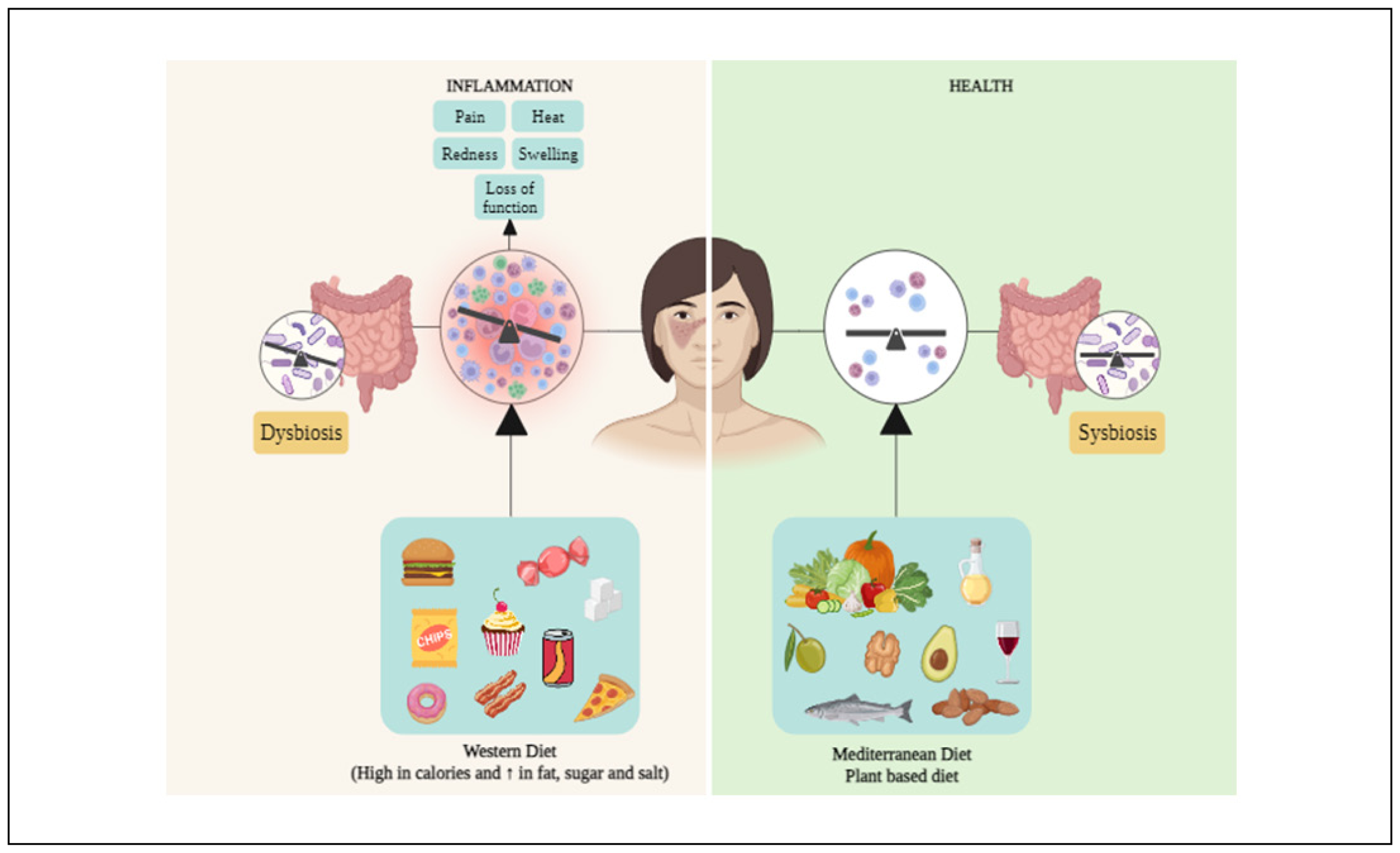
Figure 1. In SLE, the exacerbated production of antibodies characterizes chronic inflammation. Inflammation has five cardinal signs: pain, heat, redness, swelling and loss of function. A Western dietary pattern consisting of ultra-processed foods, saturated and trans fats, refined grains, sugars, sodium and an excess of red and processed meats is positively associated with a more pronounced inflammatory state in SLE, as well as greater disease activity and an imbalance in the intestinal microbiota (dysbiosis). In contrast, a Mediterranean and plant-based dietary pattern characterized by predominant consumption of fruits, vegetables, cereals, whole grains, olive oil, culinary spices, herbs, teas and oilseeds, moderate consumption of fish, dairy products and red wine and low consumption of red meat is associated with regulation of the immune system, balance of the intestinal microbiota (symbiosis) and lower plasma concentrations of inflammatory markers and oxidative stress.
The Mediterranean diet includes the predominant consumption of fruits, vegetables, cereals, whole grains, olive oil, culinary spices, herbs, teas and oilseeds, moderate consumption of fish, dairy products and red wine and low consumption of red meat31. A clinical study conducted with SLE patients showed that greater adherence to the Mediterranean diet resulted in a reduction in anthropometric measurements, lower disease activity and a lower cardiovascular risk32. Another study implemented with individuals with SLE and high cardiovascular risk showed that the incidence of cardiovascular events was lower among those who adopted a Mediterranean diet supplemented with olive oil or nuts compared to individuals who adopted a low-fat diet33.
The positive impact of polyphenols on the regulation of inflammatory signaling in different metabolic pathways has already been widely elucidated and this occurs mainly by modifying the expression of pro-inflammatory genes and cytokines, modulating immune cells and eliminating reactive oxygen species due to their antioxidant and anti-inflammatory effects34. Curcumin is an example of a bioactive phenolic compound with the ability to reduce inflammatory cytokines such as TNF and interleukin 1 (IL-1); inflammatory mediators such as prostaglandins and leukotrienes and inhibit enzymes involved in the metabolism of arachidonic acid, such as cyclooxygenase (COX) and lipoxygenase (LOX)35,36. In addition, polyphenols suppress the action of macrophages, which are released in the inflammatory response along with pro-inflammatory cytokines such as IL-6 and TNF-α37. This repression occurs through the enzymatic inhibition of cyclooxygenase-2 (COX-2), resulting in a reduction in the production and expression of TNF-α, interleukin-1-β (IL-1-β) and IL-638. An experimental study conducted with female mice with a systemic autoimmune disease similar to human SLE aimed to investigate the effects of curcumin on lupus nephritis. To this end, the mice received intraperitoneal injections of 50 mg/kg curcumin every other day or saline solution (control group) for 8 weeks. The intervention group showed lower levels of B-cell activating factor in macrophages and the administration of curcumin seemed to improve the progression of the disease and nephritis39.
On the other hand, an inadequate distribution of energy and macronutrients and eating habits that characterize a Western diet (ultra-processed foods, saturated and trans fats, refined grains, added sugars, sodium and an excess of red and processed meats) seem to cause an increase in the inflammatory state and consequent worsening of the disease and adverse clinical manifestations40,41. As an example, it has been observed that a high consumption of animal proteins, especially processed red meats, has been associated with a higher SLEDAI in SLE32.
The relationship between the intestinal microbiota and the pathogenesis of autoimmune diseases has been increasingly explored42. An imbalance in the intestinal microbiota (dysbiosis) is directly associated with greater permeability of the intestinal barrier, the possibility of pathogens entering the bloodstream (e.g., lipopolysaccharides) and deregulation of the immune system due to inflammation43,44. In this sense, dietary interventions play an important role in regulating the intestinal microbiota43. Food rich in soluble fiber, such as cereals, grains, legumes, fruits and vegetables are fermented by the intestinal microbiota, releasing a series of compounds, including short-chain fatty acids (SCFA) which promote anti-inflammatory effects mediated by inhibition of the nuclear factor kappa B (NF-kB) pathway45.
Metagenomic studies show that SLE patients have a different and specific intestinal microbial composition when compared to healthy individuals44,46. Furthermore, a lower microbial diversity has been associated with SLE patients, especially in those with a higher rate of disease activity47. This differentiation and specificity includes a higher proportion of Bacteroidetes and Ruminococcus gnavus type bacteria and a lower proportion of Firmicutes type bacteria47. Thus, nutrition that favors the health of the intestinal microbiota with foods rich in fiber, probiotics, prebiotics and synbiotics seems to be the key to improving the inflammatory symptoms48,49. On the other hand, a Western dietary pattern high in saturated fats and animal proteins seems to have a negative impact on the health of the composition of the intestinal microbiota through dysfunction and increased permeability of the intestinal barrier along with the leakage of bacterial metabolites into the circulation50. Other studies have shown, for example, that a high-fat diet is associated with greater release of pro-inflammatory cytokines such as TNF-α and IL-6, as well as increased hepatic production of CRP51,52.
In conclusion, nutrition is essential in the prevention and maintenance of health in the most diverse clinical conditions and, through personalized diets, inflammatory profiles and immune system dysfunctions can be modulated. Precision nutrition focused on healthy dietary patterns increasingly appears to positively intervene in the profile of autoimmune diseases such as SLE, helping to reduce disease activity, improve symptoms and mitigate the side effects of intensive pharmacological treatments. Finally, when properly integrated, advances in omics technologies and phenotypic markers are fundamental to the future of precision nutrition and the development of new therapeutic interventions of clinical interest.
Funding
This article has not received any specific grant from funding agencies in the public, commercial, or for-profit sectors.
Conflict of Interest
The authors declare no conflict of interest.
References
Ramos-Lopez O, Martinez-Urbistondo D, Vargas-Nuñez JA, Martinez JA. The Role of Nutrition on Meta-inflammation: Insights and Potential Targets in Communicable and Chronic Disease Management. Current Obesity Reports. 2022;11:305–335.
Gusev E, Zhuravleva Y. Inflammation: A New Look at an Old Problem. Int J Mol Sci. 2022;23:4596.
Feehan KT, Gilroy DW. Is Resolution the End of Inflammation? Trends in Molecular Medicine. 2019;25:198–214.
Yao X, Huang J, Zhong H, Shen N, Faggioni R, Fung M, et al. Targeting interleukin-6 in inflammatory autoimmune diseases and cancers. Pharmacology and Therapeutics. 2014;141:125–3.
Park HK, Kwak MK, Kim HJ, Ahima RS. Linking resistin, inflammation, and cardiometabolic diseases. Korean Journal of Internal Medicine; 2017;32:239–47.
Chiurchiù V, Leuti A, Maccarrone M. Bioactive lipids and chronic inflammation: Managing the fire within. Frontiers in Immunology. 2017;32:239–247.
Zucchi D, Elefante E, Schilirò D, Signorini V, Trentin F, Bortoluzzi A, et al. One year in review 2022: systemic lupus erythematosus. Clin Exp Rheumatol. 2022;40:4–14.
Hoffman RW, Merrill JT, Alarcón-Riquelme MME, Petri M, Dow ER, Nantz E, et al. Gene Expression and Pharmacodynamic Changes in 1,760 Systemic Lupus Erythematosus Patients From Two Phase III Trials of BAFF Blockade With Tabalumab. Arthritis and Rheumatology. 2017;69:643–54.
Goldblatt F, O’Neill SG. Clinical aspects of autoimmune rheumatic diseases. The Lancet. 2013;382:797–808.
Fortuna G, Brennan MT. Systemic Lupus Erythematosus. Dent Clin North Am. 2013;57:631–55.
Moreno-Torres V, Castejón R, Mellor-Pita S, Tutor-Ureta P, Durán-del Campo P, Martínez-Urbistondo M, et al. Usefulness of the hemogram as a measure of clinical and serological activity in systemic lupus erythematosus. J Transl Autoimmun. 2022;5:100157.
Moreno‐Torres V, Castejón R, Martínez‐Urbistondo M, Gutiérrez‐Rojas Á, Vázquez‐Comendador J, Tutor P, et al. Serum cytokines to predict systemic lupus erythematosus clinical and serological activity. Clin Transl Sci. 2022;15:1676–86.
Zian Z, Maamar M, Aouni M El, Barakat A, Naima Ghailani Nourouti, El Aouad R, et al. Immunological and Clinical Characteristics of Systemic Lupus Erythematosus: A Series from Morocco. Biomed Res Int. 2018;3139404.
Mok CC. Metabolic syndrome and systemic lupus erythematosus: the connection. Expert Rev Clin Immunol. 2019;15:765–75.
Goessler KF, Gualano B, Nonino CB, Bonfá E, Nicoletti CF. Lifestyle Interventions and Weight Management in Systemic Lupus Erythematosus Patients: A Systematic Literature Review and Metanalysis. J Lifestyle Med. 2022;12:37–46.
Versini M, Jeandel PY, Rosenthal E, Shoenfeld Y. Obesity in autoimmune diseases: Not a passive bystander. Autoimmun Rev. 2014;13:981–1000.
Harpsøe MC, Basit S, Andersson M, Nielsen NM, Frisch M, Wohlfahrt J, et al. Body mass index and risk of autoimmune diseases: a study within the Danish National Birth Cohort. Int J Epidemiol. 2014;43:843–55.
Liu Y, Hazlewood GS, Kaplan GG, Eksteen B, Barnabe C. Impact of Obesity on Remission and Disease Activity in Rheumatoid Arthritis: A Systematic Review and Meta-Analysis. Arthritis Care Res (Hoboken). 2017;69:157–65.
Kono M, Nagafuchi Y, Shoda H, Fujio K. The Impact of Obesity and a High-Fat Diet on Clinical and Immunological Features in Systemic Lupus Erythematosus. Nutrients. 2021;4;13:504.
San-Cristobal R, Navas-Carretero S, Martínez-González MÁ, Ordovas JM, Martínez JA. Contribution of macronutrients to obesity: implications for precision nutrition. Nat Rev Endocrinol. 2020;16:305–20.
González-Muniesa P, Martínez JA. Precision nutrition and metabolic syndrome management. Nutrients. 2019;11:2411.
Ordovas JM, Ferguson LR, Tai ES, Mathers JC. Personalised nutrition and health. BMJ. 2018;13;bmj.k2173.
Jiao H, Acar G, Robinson GA, Ciurtin C, Jury EC, Kalea AZ. Diet and Systemic Lupus Erythematosus (SLE): From Supplementation to Intervention. International Journal of Environmental Research and Public Health. 2022;19:11895.
Cassotta M, Forbes-Hernandez TY, Cianciosi D, Zabaleta ME, Cano SS, Dominguez I, et al. Nutrition and rheumatoid arthritis in the ‘omics’ era. Nutrients. 2021;13:763.
Constantin M, Nita I, Olteanu R, Constantin T, Bucur S, Matei C, et al. Significance and impact of dietary factors on systemic lupus erythematosus pathogenesis (Review). Exp Ther Med. 2019;17:1085–1090.
Kostopoulou M, Nikolopoulos D, Parodis I, Bertsias G. Cardiovascular Disease in Systemic Lupus Erythematosus: Recent Data on Epidemiology, Risk Factors and Prevention. Curr Vasc Pharmacol. 2020;18:549–65.
Garcia-Garcia P, Castejon R, Tutor-Ureta P, Silvestre RA, Mellor-Pita S, Jimenez-Ortiz C, et al. Serum cystatin C is associated with kidney function but not with cardiovascular risk factors or subclinical atherosclerosis in patients with Systemic Lupus Erythematosus. Clin Rheumatol. 2017;36:2709–17.
Lopez-Garcia E, Schulze MB, Manson JE, Meigs JB, Albert CM, Rifai N, et al. Consumption of (n-3) Fatty Acids Is Related to Plasma Biomarkers of Inflammation and Endothelial Activation in Women. J Nutr. 2004;134:1806–11.
Montemayor S, Mascaró CM, Ugarriza L, Casares M, Llompart I, Abete I, et al. Adherence to Mediterranean Diet and NAFLD in Patients with Metabolic Syndrome: The FLIPAN Study. Nutrients. 2022;14:3186.
Estruch R, Ros E, Salas-Salvadó J, Covas MI, Corella D, Arós F, et al. Primary Prevention of Cardiovascular Disease with a Mediterranean Diet. New England Journal of Medicine. 2013;368:1279–90.
Gantenbein K V., Kanaka-Gantenbein C. Mediterranean diet as an antioxidant: The impact on metabolic health and overall wellbeing. Nutrients. 2021;13:1951.
Pocovi-Gerardino G, Correa-Rodríguez M, Callejas-Rubio JL, Ríos-Fernández R, Martín-Amada M, Cruz-Caparros MG, et al. Beneficial effect of Mediterranean diet on disease activity and cardiovascular risk in systemic lupus erythematosus patients: A cross-sectional study. Rheumatology (United Kingdom). 2021;60:160–9.
Estruch R, Ros E, Salas-Salvadó J, Covas MI, Corella D, Arós F, et al. Primary Prevention of Cardiovascular Disease with a Mediterranean Diet Supplemented with Extra-Virgin Olive Oil or Nuts. New England Journal of Medicine. 2018;378:34.
Yahfoufi N, Alsadi N, Jambi M, Matar C. The immunomodulatory and anti-inflammatory role of polyphenols Nutrients. 2018;10:1618.
Marchiani A, Rozzo C, Fadda A, Delogu G, Ruzza P. Curcumin and Curcumin-like Molecules: From Spice to Drugs. Curr Med Chem. 2013;21:204–22.
Noorafshan A, Ashkani-Esfahani S. A review of therapeutic effects of curcumin. Curr Pharm Des. 2013;19:2032–46.
Murray PJ, Wynn TA. Protective and pathogenic functions of macrophage subsets. Nature Reviews Immunology. 2011;11:723–37.
González R, Ballester I, López-Posadas R, Suárez MD, Zarzuelo A, Martínez-Augustin O, et al. Effects of flavonoids and other polyphenols on inflammation. Critical Reviews in Food Science and Nutrition. 2011;51:331–62.
Li, Q., Tan, S., Xu, K., Fu, X., Yu, J., Yang, H., et al. Curcumin attenuates lupus nephritis in MRL/lpr mice by suppressing macrophage-secreted B cell activating fator (BAFF). International Journal of Clinical and Experimental Pathology. 2019;12:2075–2083.
Christ A, Lauterbach M, Latz E. Western Diet and the Immune System: An Inflammatory Connection. Immunity. 2019;51:794–811.
Lopes AE da SC, Araújo LF, Levy RB, Barreto SM, Giatti L. Association between consumption of ultra-processed foods and serum c-reactive protein levels: Cross-sectional results from the ELSA-Brasil study. Sao Paulo Medical Journal. 2019;137:169–76.
Yi X, Huang C, Huang C, Zhao M, Lu Q. Fecal microbiota from MRL/lpr mice exacerbates pristane-induced lupus. Arthritis Res Ther. 2023;25:42.
Pan Q, Guo F, Huang Y, Li A, Chen S, Chen J, et al. Gut Microbiota Dysbiosis in Systemic Lupus Erythematosus: Novel Insights into Mechanisms and Promising Therapeutic Strategies. Frontiers in Immunology. 2021;12:799788.
Xiang S, Qu Y, Qian S, Wang R, Wang Y, Jin Y, et al. Association between systemic lupus erythematosus and disruption of gut microbiota: a meta-analysis. Lupus Sci Med. 2022;9:e000599.
Guan ZW, Yu EZ, Feng Q. Soluble dietary fiber, one of the most important nutrients for the gut microbiota. Molecules. 2021;26:6802.
Hevia A, Milani C, López P, Cuervo A, Arboleya S, Duranti S, et al. Intestinal dysbiosis associated with systemic lupus erythematosus. mBio. 2014;5:e01548–14.
Azzouz D, Omarbekova A, Heguy A, Schwudke D, Gisch N, Rovin BH, et al. Lupus nephritis is linked to disease-activity associated expansions and immunity to a gut commensal. Ann Rheum Dis. 2019;78:947–56.
Etxeberria U, Fernández-Quintela A, Milagro FI, Aguirre L, Martínez JA, Portillo MP. Impact of Polyphenols and Polyphenol-Rich Dietary Sources on Gut Microbiota Composition. J Agric Food Chem. 2013;61:9517–33.
Cuevas-Sierra A, Ramos-Lopez O, Riezu-Boj JI, Milagro FI, Martinez JA. Diet, Gut Microbiota, and Obesity: Links with Host Genetics and Epigenetics and Potential Applications. Advances in Nutrition. 2019;10:S17–30.
Malesza IJ, Malesza M, Walkowiak J, Mussin N, Walkowiak D, Aringazina R, et al. High-fat, western-style diet, systemic inflammation, and gut microbiota: A narrative review. Cells. 2021;10:3164.
Wang B, Kong Q, Li X, Zhao J, Zhang H, Chen W, et al. A high-fat diet increases gut microbiota biodiversity and energy expenditure due to nutrient difference. Nutrients. 2020;12:1–20.
Gulhane M, Murray L, Lourie R, Tong H, Sheng YH, Wang R, et al. High Fat Diets Induce Colonic Epithelial Cell Stress and Inflammation that is Reversed by IL-22. Sci Rep. 2016;6:28990.
Explorar
Artículos
Volúmenes
Sobre la revista
Más leídos
Hábitos alimentarios en estudiantes universitarios de una facultad de salud en Colombia
Revista Chilena de Nutrición
Orientación técnica para el manejo nutricional de la persona adulta con cáncer
Revista Chilena de Nutrición
Recomendaciones prácticas para el manejo nutricional de la enfermedad renal crónica en etapas 3 a 5 con y sin diálisis para adultos y personas mayores en Chile
Revista Chilena de Nutrición
Productos de glicación avanzada en alimentos: estrategias de preparación y procesamiento para reducir su contenido, para un envejecimiento saludable
Revista Chilena de Nutrición
Aceite de canola: recomendaciones de ingesta para la prevención y el tratamiento de enfermedades crónicas no transmisibles
Revista Chilena de Nutrición